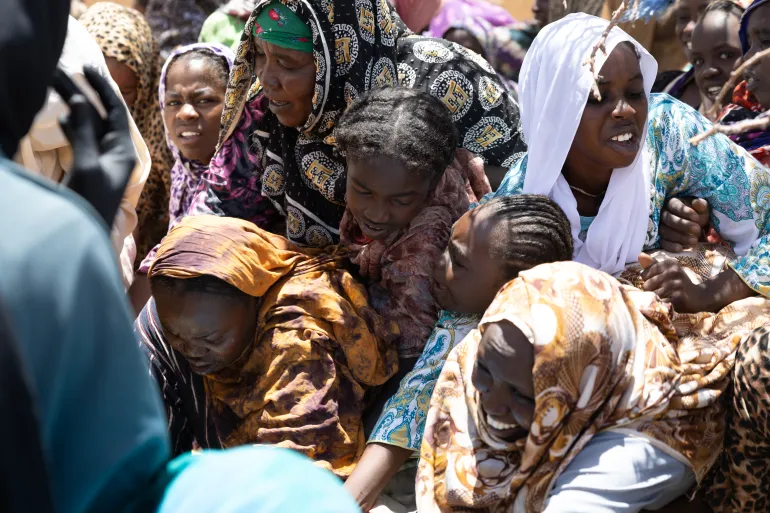
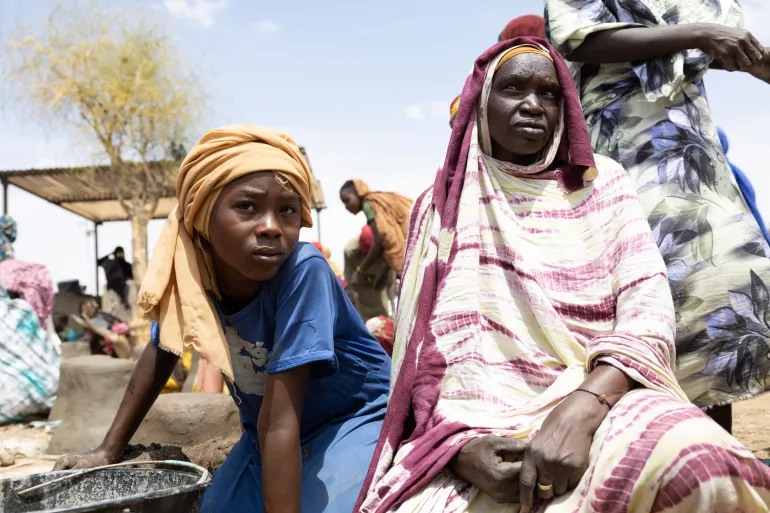
Sudanese refugees scramble to collect water at Goudrane refugee camp in eastern Chad amid growing shortages across the settlement [Mirja Vogel/Al Jazeera]
Executive Summary
As the war in Sudan enters its fourth year, over 938,000 refugees have crossed into eastern Chad, escalating what the United Nations identifies as the world’s largest humanitarian and displacement crisis.
Having escaped systemic violence, targeted ethnic persecution, and traumatic journeys, refugees now face a severe, life-threatening resource bottleneck in Chadian camps. A critical lack of basic infrastructure and severe international underfunding have left settlements without adequate access to safe drinking water, threatening survival and rendering medical aid ineffective.
1. Acute Water Crisis & Resource Desperation
Eastern Chad’s arid environment and overcrowded conditions have strained humanitarian infrastructure to a breaking point.
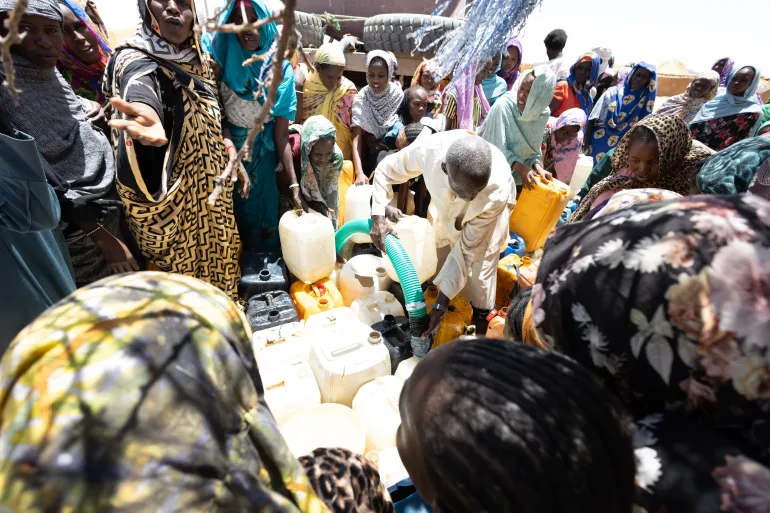
Water is distributed at Goudrane refugee camp in eastern Chad, where humanitarian agencies say growing needs are outpacing available resources [Mirja Vogel/Al Jazeera]
+-------------------------------------------------------------------------+
|                       KEY CRISIS METRICS & DATA                         |
+--------------------------+----------------------------------------------+
| Parameter                | Status / Impact                              |
+--------------------------+----------------------------------------------+
| Total Refugees (Chad)    | > 938,000 (Since April 2023)                 |
| Goudrane Camp Population | ~50,000 refugees                             |
| Water Supply Standard    | Less than half of UNHCR minimum standard      |
| Core Infrastructure Gap  | Boreholes, pipelines, sanitation, treatment  |
| Critical Disruptions     | Water dry spells lasting up to 4+ days       |
+--------------------------+----------------------------------------------+
Stampedes for Basic Survival: At camps like Goudrane, water deliveries via trucks (e.g., 6,000-liter capacity) are exhausted within 10 minutes. Chaotic scrambles lead to injuries among women and children, with many walking away empty-handed.
Medical Bottleneck: Field doctors report having medicine for infections and waterborne bacteria, but treatment is hindered because patients lack clean water required to administer doses.
Humanitarian Aid Breakdown: Agencies such as Solidarités International highlight that current funding falls far short of operational needs, leaving needs rapidly outpacing existing boreholes and logistics.
2. Escaping Atrocities: Refugee Accounts
Refugees arriving at transit points like Adre and camps like Metche carry physical and psychological trauma from their escape from Sudan’s main combatants: the Rapid Support Forces (RSF) and the Sudanese Armed Forces (SAF).
Key Testimonies
Rokhia Ibrahim :
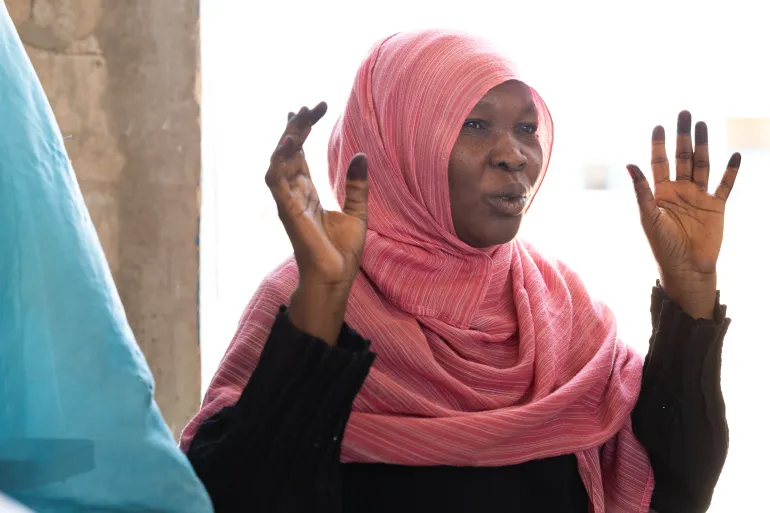
Rokhia Ibrahim, 43 and a Sudanese schoolteacher, inside the school building in the Goudrane refugee camp in eastern Chad [Mirja Vogel/Al Jazeera]
Escaped fighting in el-Fasher. RSF fighters assaulted her family during their escape, threw her baby to the ground, and repeatedly kicked her husband until he lost his sight. Soldiers poured out their remaining drinking water onto the ground.
Zahra Khamis (Masalit Community – Adre Transit Site)
Inside a shelter at the Adre transit site, Zahra Khamis describes how she survived a violent rape and several attacks at her home but lost her child on the road to Adre [Mirja Vogel/Al Jazeera]
Fled el-Geneina (West Darfur). Survived violent rape, repeated home attacks, and nearly 50 days of drone strikes and market bombings. Her son was killed on the road to Adre, where she witnessed dozens of civilian bodies lining the escape route.
Fatne Adam (53 – Metche Camp)
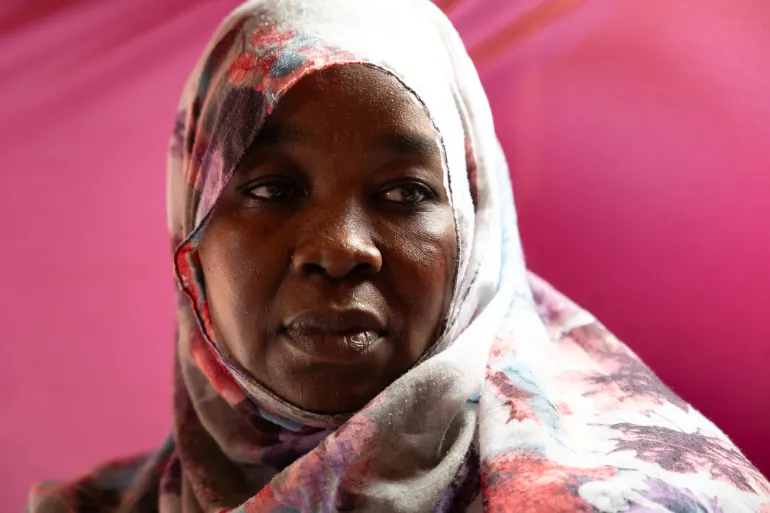
Fatne Adam (right), who fled Sudan in 2023, has lived in Metche refugee camp in eastern Chad ever since. She says her husband and son were shot by snipers as the family escaped the war [Mirja Vogel/Al Jazeera]
Resident of Metche camp for over three years. Both her husband and son were killed by snipers while escaping Sudan in 2023.
3. Human Rights Violations & Conflict Dynamics
Ethnic Cleansing: Members of non-Arab ethnic groups, notably the Masalit community, have been systematically targeted by the RSF and allied militias, particularly in West Darfur (el-Geneina). UN investigators classify these coordinated assaults as ethnic cleansing.
Geopolitical Proxy Factors: International peace efforts remain stagnant. Foreign governments accused of supplying and supporting both the SAF and RSF face growing criticism for prolonging the conflict.
4. Operational Outlook & Hopes of Return
                 +---------------------------------------+
                 |          HUMANITARIAN IMPACT          |
                 +---------------------------------------+
                                     |
           +-------------------------+-------------------------+
           v                                                   v
+--------------------+                               +--------------------+
|  IMMEDIATE RISKS   |                               | LONG-TERM OUTLOOK  |
| - Severe Dehydration|                              | - Fading Hopes of  |
| - Disease Outbreak |                               |   Return           |
| - Escalating Stampedes                              | - Chronic Aid Gaps |
+--------------------+                               +--------------------+
Protracted Displacement: With the conflict spreading across Sudan, refugees see no near-term path back. Refugees express a desire to return only when peace is secured, though no timeline or resolution is in sight.
Immediate Need: Without an immediate injection of international funding and expanded water supply infrastructure (deep wells, pipelines, treatment networks), mortality rates in eastern Chad camps risk spiking due to severe dehydration and preventable waterborne illnesses.