

WASHINGTON / TEHRAN — U.S. President Donald Trump stated on Monday that active diplomatic negotiations with Iran are underway « right now, » framing the dialogue as Tehran’s final window to reach a comprehensive settlement. The statements coincide with stern warnings from the Islamic Revolutionary Guard Corps (IRGC) and ongoing maritime security concerns across critical regional choke points.
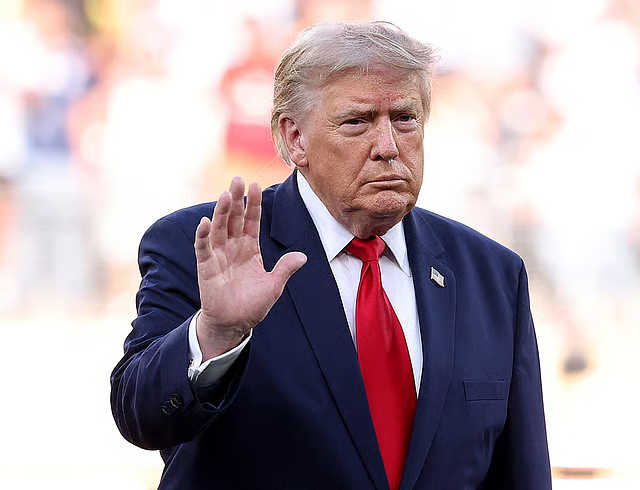
Key Developments & Statements
1. « Deal, or Total Surrender »: Washington’s Position
- Ultimatum Issued: President Trump described current negotiations as a « last chance » for Tehran to sign an acceptable agreement regarding its nuclear capabilities and regional security.
- Rejection of Transit Fees: Addressing the situation in the Strait of Hormuz, President Trump emphasized that the U.S. retains « total control » and will not permit Iran to impose transit fees or charges on international shipping.
- Blockade Capability: The U.S. President pointed to American naval blockade capabilities to ensure free navigation, warning that Tehran must reach a « Deal, or Total Surrender » to resolve the confrontation.
2. IRGC Defense Posture & Regional Tensions
- Warning Against Miscalculation: Ground Force Commander Mohammad Karami declared that Iranian forces remain at high alert and are prepared to respond decisively to any « miscalculation » by external adversaries or non-state actors.
- Maritime Security Risks: Despite active vessel movements, both the Strait of Hormuz and the Bab El Mandeb remain designated as high-risk transit corridors amidst ongoing U.S.–Israel–Iran conflict dynamics.
Official Summary:
- United States: Demands an immediate agreement ensuring denuclearization and free maritime navigation in the Strait of Hormuz, backed by economic and naval pressure.
- Iran (IRGC): Maintains military readiness across land and maritime borders, rejecting unilateral U.S. demands while warning of immediate retaliation against hostile action.