
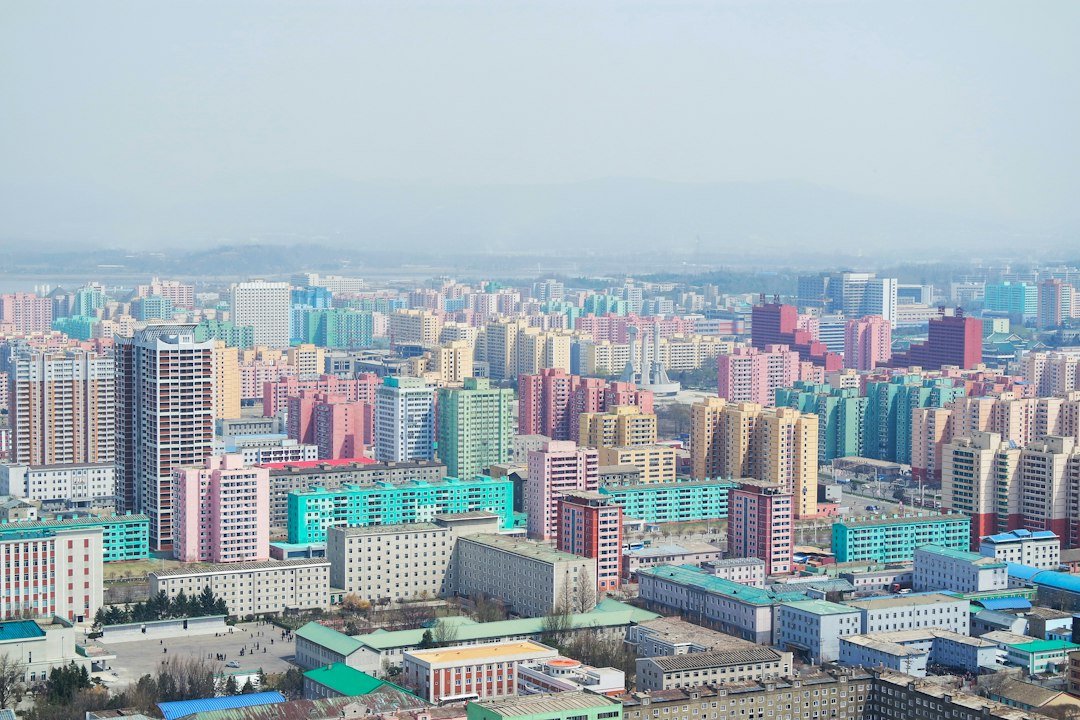
3 November 2026 | Geneva — A senior United Nations human rights official has warned that the Democratic People’s Republic of Korea (DPRK) is becoming more isolated even as the country expands infrastructure, mobile technology and domestic economic projects.
James Heenan, head of the UN Human Rights Office in Seoul, told UN News that factories and hospitals are being built, smartphones and mobile banking are spreading, and new laws are being adopted. However, he said the country is more cut off from the outside world than at any point in its history, leaving UN human rights monitors without direct access.
The OHCHR team therefore relies on interviews with people who have left the country, witness accounts, publicly available government information and other sources such as satellite imagery. Heenan said the office had interviewed about 1,000 people, while emphasising the difficulty of independently assessing conditions inside a country that remains exceptionally closed.
He described persistent concerns about hunger, restrictions on movement, surveillance and forced labour. Interviewees have reported that people can be mobilised for public works for extended periods without pay, while schoolchildren are sometimes sent to work in fields during harvest periods.
Although the authorities have reported infrastructure development and the expansion of mobile services, the UN official cautioned that access to smartphones does not mean access to the global internet. Digital services operate within a restricted environment and may also make surveillance more efficient, even as mobile banking has become more widely used.
Food insecurity remains another concern. Heenan noted that drought had affected the country earlier in the year and that weaknesses in the production and distribution system can leave people facing nutritional problems even when harvests are adequate. He also recalled reports of starvation during the COVID-19 period.
The UN official highlighted the continuing separation of families between the DPRK and the Republic of Korea, as well as families in Japan affected by past enforced disappearances. Many surviving relatives are elderly, making renewed family reunions increasingly urgent from a humanitarian perspective.
Heenan urged the international community not to view the Korean Peninsula only through the lens of peace and security. Human rights, freedom of movement, access to information, protection from forced labour and humanitarian access must remain part of international engagement with the DPRK.
Sources: UN Geneva, “DPR Korea: Isolation deepens even as the country changes,” 3 November 2026; OHCHR — Democratic People’s Republic of Korea.